
How to Read Online Casino Game Rules: A Practical Malaysia Checklist
A category-neutral method for checking rules, limits, outcomes and costs before choosing an online casino game.
Introduction
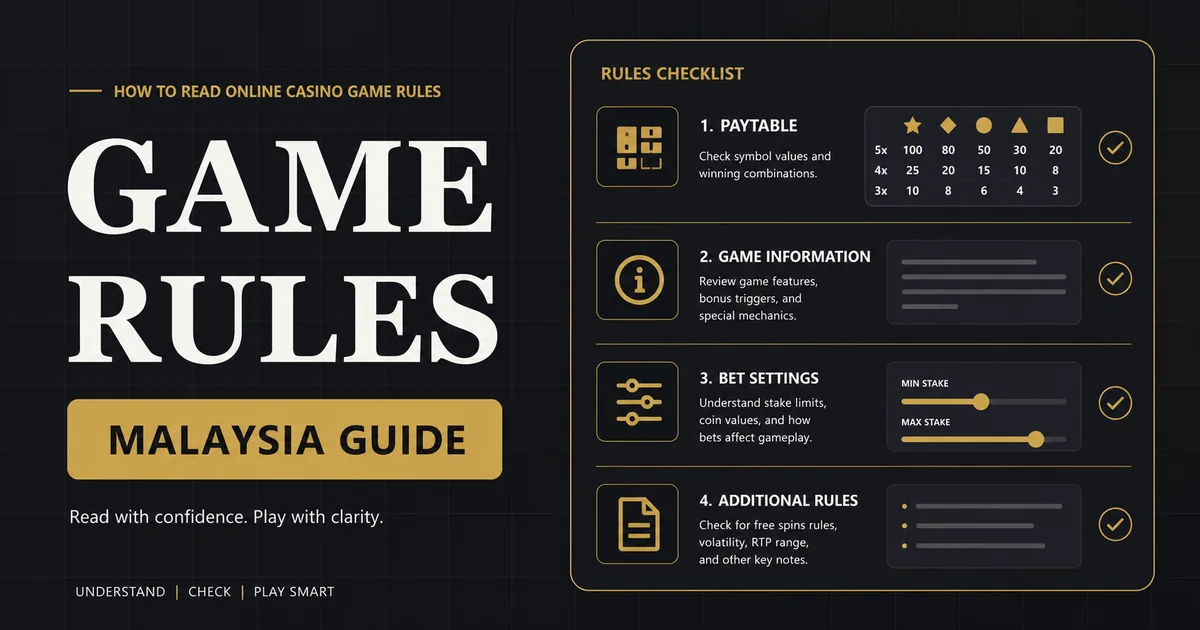
Online casino game rules should be read in a fixed order: first identify the objective, then check how a round starts and ends, what each stake buys, how results are determined, which limits apply and where the complete paytable or market rules are displayed. This method works across slots, live tables, sportsbook markets, fishing games and 4D information, even though the mechanics of those categories are very different.
A game lobby often highlights artwork, jackpots or promotions before it explains the practical details a user needs. That does not make the rules unavailable, but it means players should pause and find the information panel rather than learning through costly trial and error. This guide supports the site’s Games category hub with a reusable reading checklist. It does not recommend a particular game or promise an outcome. For a separate brand reference, users can review the Winbox gaming information resource.
Quick Answer
- Find the full rules or information panel before placing a stake.
- Confirm the objective and the exact event that ends a round.
- Read stake units, minimums, maximums and optional feature costs.
- Separate displayed examples from guaranteed outcomes.
- Check category-specific terms such as payline, market, multiplier or prize tier.
- Set a session budget and stop point before testing unfamiliar mechanics.
Start With the Game Objective
The objective tells you what the game is measuring. In a slot, it may be a symbol combination evaluated on paylines or ways. In a live table game, the result may compare hands or outcomes under stated rules. A sportsbook ticket depends on a defined market and settlement condition, while a fishing game may convert actions into points or rewards according to an internal scoring system.
Write the objective in one sentence. If you cannot explain what creates a win, loss, void or completed round, keep reading. Short labels in the lobby are not a substitute for the rule panel. The five-category games guide can help identify which type of rulebook you should expect.
Questions to answer first
What action starts the round? What event completes it? Can the round be cancelled or voided? Does the result depend on chance, a live event, a player decision or a mixture of these? These questions prevent category terms from being treated as if they mean the same thing.
Read Stakes, Units and Limits
A displayed number may represent a total stake, a stake per line, a chip value, a unit, a market amount or the cost of one action. Confirm the unit before changing it. Optional features can alter the total cost, and an automatic-play control can repeat that cost many times.
Minimum and maximum values can differ by game, table, market, payment currency and account. The visible interface at the time of play is more reliable than an old screenshot. If the total cost is not clear, use the lowest available test value or do not proceed.
Check the total, not the headline number
For slots, multiply or confirm the displayed total bet rather than assuming the line value is the whole cost. For sportsbook, review the final stake and potential return shown on the slip. For fishing games, consider how quickly repeated actions consume the session budget.
Understand Results and Paytables
A paytable maps defined outcomes to a payout or reward rule. It should be read together with line patterns, wild or substitute rules, feature triggers and maximum-win conditions. A sportsbook market needs settlement rules, including what happens after postponement, abandonment or a participant withdrawal. A 4D result page needs a draw identifier, date and prize tier.
Examples and animations illustrate mechanics; they do not establish a future result. Random outcomes remain uncertain. Where a game discloses theoretical return or volatility information, treat it as a long-run model rather than a short-session prediction. The focused Slots page explains the category context.
Check Timing, Connectivity and Confirmation
Live and time-sensitive products add another layer: betting windows close, feeds can be delayed and an interface may need to confirm that a wager was accepted. Never infer acceptance from a button press alone. Look for a ticket, transaction record or on-screen confirmation.
If a connection drops, avoid repeatedly submitting the same action. Reopen the history or round record first. For result-based information, confirm the draw or event details from the current page. The account security guide also explains why users should avoid unofficial support links when resolving an error.
Review Promotions Separately From Game Rules
A promotion can add eligibility, turnover, expiry or game-contribution conditions, but it does not replace the underlying game rules. Read the two documents separately and then check how they interact. A game can be available while contributing zero or a reduced percentage toward a promotion.
The Promotions page is the correct landing page for current benefit categories. Before accepting any offer, confirm eligible games, qualifying stakes, maximum-bet restrictions and withdrawal conditions.
Practical Reference Table
| Category | Rule details to locate | Common misunderstanding |
|---|---|---|
| Slots | Paytable, lines or ways, feature cost, wild and bonus rules | Treating the displayed coin value as the total bet |
| Live Casino | Table limits, action windows, side bets and result rules | Assuming every table uses identical rules |
| Sportsbook | Market definition, odds, settlement and void rules | Choosing a market from its short label alone |
| Fishing Games | Action cost, target value, scoring and round state | Ignoring the cost of repeated actions |
| 4D Information | Draw date, result source, number and prize tier | Reading a result without matching the correct draw |
Step-by-Step Checklist
-
Open the information panel
Locate Rules, Help, Paytable, Market Rules or an equivalent link before starting.
-
Name the objective
Explain in one sentence what produces a completed result.
-
Confirm the total cost
Check the stake unit, optional features and repeated-action settings.
-
Read special terms
Identify substitutes, multipliers, side bets, void conditions or prize tiers.
-
Check the record
Know where accepted wagers, round history or results are confirmed.
-
Set limits
Choose a maximum spend and session duration before testing the game.
Frequently Asked Questions
Are online casino game rules the same on every platform?
No. Categories share common concepts, but table variants, paytables, market settlement, limits and interface controls can differ. Read the rules shown for the exact game or market.
What is the most important number to check?
The total amount committed to one round or action. A smaller component value can be misleading when paylines, units, side bets or repeated actions increase the total.
Does a paytable predict what will happen next?
No. A paytable defines how stated outcomes are valued. It does not predict the next result or guarantee that a feature will occur during a session.
What should I do if the rules are incomplete?
Do not rely on guesses or third-party screenshots. Pause, check the current help section and use the platform’s documented support route if a material rule is missing.
How should beginners compare two games?
Compare objective, total cost per action, pace, complexity, result confirmation and personal budget fit rather than artwork or a headline reward alone.
Where can I learn about safer session limits?
Use the site’s responsible gaming guidance to set time and spending boundaries before play.
Conclusion
Reading rules is a decision process, not a formality. Identify the objective, total cost, result logic, special terms, confirmation record and personal limit before choosing a game. This reduces preventable misunderstandings while keeping each category’s distinct mechanics clear.
Continue Your Research
Use the site’s focused landing page and related guides to verify current information before making a decision.