
Arcade Fishing Game Mechanics: Controls, Scoring and Cost per Action
A mechanics-first explanation of target selection, repeated actions, scoring and budget pace in arcade-style fishing games.
Introduction
Arcade fishing games place multiple moving targets on a shared or simulated underwater screen. A player selects a weapon or action value, aims at targets and spends a stated amount for each shot or repeated action. Scoring or reward rules depend on the specific game, target and feature, so the first task is understanding cost per action and how a result is recorded.
This guide explains controls and pacing without implying that repeated actions can force a result. It supports the Fishing Games category page and remains separate from the broad games overview. The Winbox fishing games information link serves as an external brand reference.
Quick Answer
- Identify the cost of one action before using rapid fire.
- Read target values, weapon levels and special-feature rules.
- Treat animation intensity as presentation, not a probability signal.
- Check whether scoring is individual, shared or round-based.
- Use manual controls until the pace and total cost are clear.
- Set a short time and action budget before starting.
The Basic Gameplay Loop
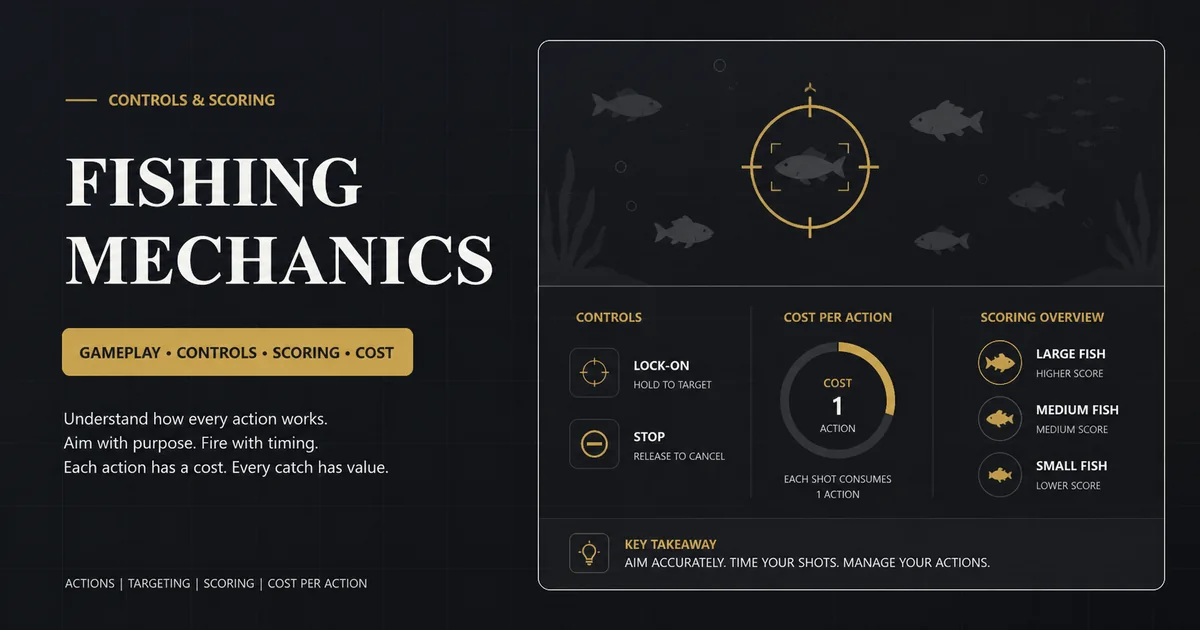
The common loop is aim, act, observe and repeat. Targets move across the screen with different visual sizes or labels. The game deducts the selected action cost and later records whether the interaction produced a score, reward or no return under its rules.
A large target is not necessarily easier or more valuable in a simple way. Read the information panel for target multipliers, feature conditions and any shared-screen mechanics. Visual motion can make it difficult to notice how quickly the balance changes.
Manual and automatic targeting
Automatic aim or lock-on can keep actions focused on one target, while rapid fire repeats them quickly. These controls increase convenience but can also accelerate spending. Test them only after confirming stop controls.
Cost per Action and Weapon Level
The selected cannon, weapon or unit value commonly determines what each action costs. Changing level may change both cost and the scoring scale. The relevant budget number is cost per action multiplied by the number of actions, not the value of a single impressive animation.
Check the balance before and after a small manual test. If a game bundles actions or applies a special mode, read whether the cost changes. Avoid holding a continuous-action control while learning the interface.
Measure pace in one minute
Count roughly how many manual actions you make in a minute and multiply by the action cost. This gives a practical pace estimate and helps set a session cap.
Targets, Multipliers and Special Events
Target labels may express relative values or feature roles. Boss targets, chains, bombs or area effects can follow special rules. A displayed multiplier may apply to a stated target value, not to the whole session or every nearby target.
Shared screens can contain actions from multiple players or simulated participants. Do not assume another person’s activity changes the result of your action unless the rules explicitly explain that interaction.
Mobile Controls and Screen Clarity
On a small screen, confirm that aim, action value, balance and stop controls remain visible. Accidental taps can change weapon level or trigger repeated actions. Use a stable orientation and avoid placing system navigation gestures over important buttons.
Audio and animation can be reduced when settings allow. This makes cost and confirmation indicators easier to notice. The Games Guide compares the pace of fishing games with slots, live tables and event-based categories.
Responsible Session Controls
Fishing games can feel continuous because there is no long pause between actions. Create your own break points: stop after a fixed number of minutes, after a defined spend or when attention drops. Do not increase action value to recover a previous result.
Read Responsible Gaming for limit-setting guidance. If payment limits also matter, review the informational Payment Methods page separately before any transaction.
Practical Reference Table
| Control or display | What it usually affects | Check before use |
|---|---|---|
| Weapon / unit level | Cost and scoring scale per action | The exact amount deducted each time |
| Lock-on | Keeps aim on a selected target | How to cancel or change target |
| Rapid fire | Repeats actions automatically | Speed, stop control and total cost |
| Target multiplier | Value under a stated rule | Which target and event it applies to |
| Special event | Temporary area or feature mechanics | Entry cost and completion rules |
Step-by-Step Checklist
-
Open the rules
Find target, scoring and special-event definitions.
-
Choose the lowest practical level
Observe the exact cost of one manual action.
-
Test aim and cancel controls
Make sure you can stop lock-on or repeated action.
-
Estimate pace
Count actions over a short interval and calculate likely spend.
-
Watch the record
Confirm how scores and balance changes are displayed.
-
Stop at the preset limit
Do not raise the level to chase a previous result.
Frequently Asked Questions
Are fishing games based on skill?
They can include aiming and timing controls, but the result and scoring rules are defined by the specific game. Skill-like interaction does not make outcomes certain.
What does the weapon level change?
It commonly changes cost per action and may change the scoring scale. Read the exact game rules.
Why can fishing games consume a budget quickly?
Actions can repeat much faster than timed table rounds, especially with rapid-fire controls.
Does a bigger target guarantee a result?
No. Size and animation are visual attributes; target values and result mechanics come from the rules.
Should beginners use auto fire?
Manual actions make pace and cost easier to observe. Learn the stop controls before any automation.
Can I play on mobile?
Many interfaces are responsive, but users should verify that cost, balance and stop controls remain clearly visible.
Conclusion
Fishing games are easiest to evaluate through action cost, pace, target rules and control visibility. Understand those mechanics with a small manual test, then keep the session inside preset time and spending boundaries.
Continue Your Research
Use the site’s focused landing page and related guides to verify current information before making a decision.