
E-Wallet vs Online Banking for Casino Payments: A Malaysia Checklist
A neutral comparison of records, limits, account ownership, deposit flow and withdrawal compatibility for two common payment routes.
Introduction
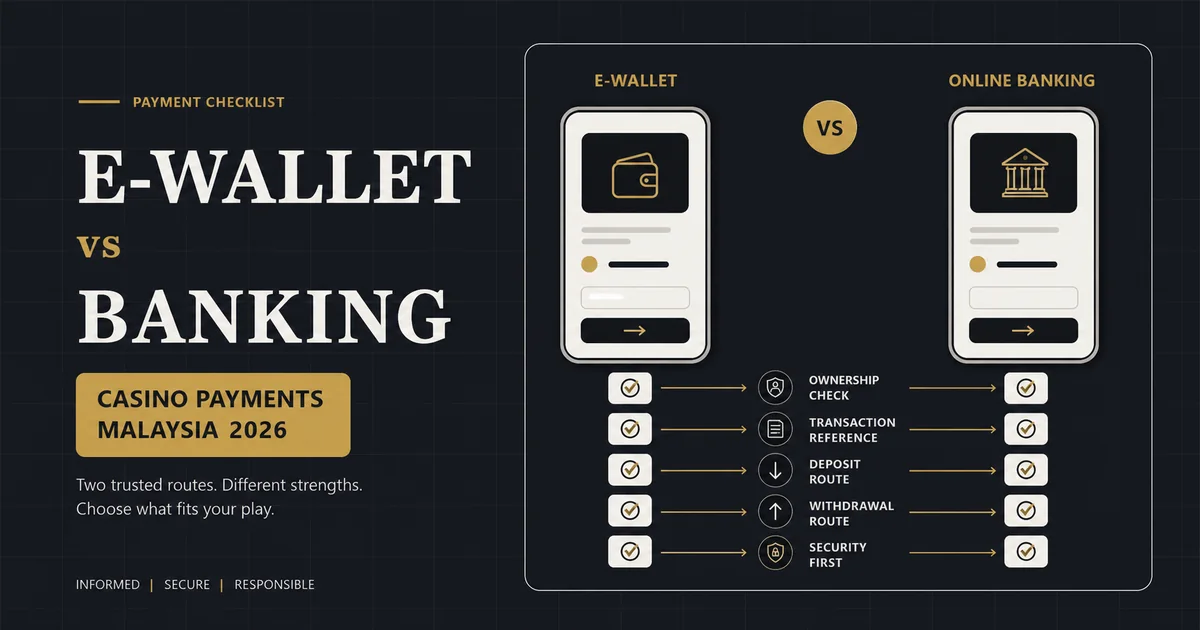
E-wallet and online banking payments differ mainly in account path, transaction records, limits, verification and withdrawal compatibility. Neither method is automatically better for every user. The practical choice is the one owned by the account holder, supported by the current platform and suitable for both deposit records and future withdrawal checks.
This article narrows the comparison to method selection, so it does not compete with the existing procedural deposit and withdrawal guide or the commercial Payment Methods page. A separate Winbox payment methods information reference is included contextually.
Quick Answer
- Use only a payment account you own and control.
- Confirm the method is supported for deposits and withdrawals.
- Compare displayed limits, fees and processing status.
- Keep the transaction reference and platform record.
- Do not send funds using instructions from an unverified chat contact.
- Resolve mismatched account names before making a transaction.
How the Two Payment Paths Differ
Online banking generally moves funds directly from a bank account through the bank’s authentication process. An e-wallet uses a separate stored-value or linked-payment account, often managed through a mobile app. Both can create electronic records, but the fields and reference numbers differ.
The platform may integrate one method automatically while handling another through additional instructions. Users should prefer a clearly identified in-account route and verify the recipient and amount before approval.
Ownership is the common requirement
A payment account in another person’s name can create verification and withdrawal problems. Use consistent legal details across the gaming account and payment method where required.
Deposit Experience
Compare minimum and maximum amounts, displayed fees, authentication steps and how quickly the platform marks the transaction. A bank transfer may show a bank reference, while an e-wallet may show a wallet transaction ID. Save both the sending record and the receiving status.
Do not make repeated deposits merely because the balance has not updated immediately. Check pending status and history first. Repetition can create duplicate transactions and complicate support.
Promotions can treat methods differently
An available payment method may be excluded from a particular promotion. Read the offer terms on the Promotions page before assuming a deposit qualifies.
Withdrawal Compatibility
The most convenient deposit route is not always the available withdrawal route. Some platforms return funds through the original method when possible, while others require a verified bank account. Check the displayed rule before choosing a method.
Withdrawal processing can involve account review, payment ownership checks and platform processing time in addition to bank or wallet transfer time. Avoid guarantees based on another user’s experience.
Records, Privacy and Security
Online banking and e-wallet apps can both provide useful timestamps, references and status indicators. Keep only necessary records and redact unrelated balance or account information when support requests proof. Never disclose passwords, PINs or one-time codes.
Bookmark the intended site and use verified support. The Account Security page explains phishing and credential checks, while the Privacy Policy defines what this information site itself collects.
Choosing a Method With a Simple Checklist
Choose based on ownership match, current support, limits, full transaction record, withdrawal path and personal account-security comfort. Convenience matters, but traceability and consistency matter more when an account needs review.
Do not split transactions across many methods unless there is a clear reason and the platform supports it. A simpler record can make later reconciliation easier.
Practical Reference Table
| Factor | E-wallet | Online banking |
|---|---|---|
| Account path | Separate wallet account or app | Direct bank account authentication |
| Record | Wallet transaction ID and status | Bank reference and statement entry |
| Ownership check | Wallet holder details may be reviewed | Bank account holder details may be reviewed |
| Limits | Set by wallet and platform | Set by bank and platform |
| Withdrawal fit | May or may not support return withdrawals | Often used when a verified bank route is required |
Step-by-Step Checklist
-
Check supported methods
Use the current account interface, not an old screenshot.
-
Match ownership details
Resolve name mismatches before sending funds.
-
Compare limits and fees
Review both platform and provider information.
-
Confirm withdrawal route
Know whether the same method can receive funds.
-
Save references
Keep sender and platform transaction identifiers.
-
Use verified support
Never disclose passwords, PINs or one-time codes.
Frequently Asked Questions
Is an e-wallet faster than online banking?
It can be convenient, but actual processing depends on the wallet, bank, platform and account review. Do not rely on a universal speed claim.
Can I deposit with one method and withdraw with another?
Possibly, but the platform may require the original method or a verified bank account. Check the current rule first.
Why does the account name matter?
Matching ownership helps verify that the account holder controls the payment source and can reduce withdrawal disputes.
Should I repeat a payment that shows as pending?
No. Check both transaction histories and allow the stated processing time before making another transfer.
Do all methods qualify for promotions?
No. A promotion can exclude an otherwise supported method.
What information should never be sent to support?
Never send a password, PIN, full card credential, recovery code or one-time verification code.
Conclusion
The better payment route is the one that creates a clear, owned and verifiable path from deposit through withdrawal. Compare the full lifecycle rather than choosing on deposit convenience alone.
Continue Your Research
Use the site’s focused landing page and related guides to verify current information before making a decision.